Personality: Tiffany Sneed
Spotlight on Richmond Public Schools’ 2026 Teacher of the Year
12/18/2025, 6 p.m.

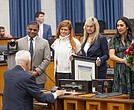
When Tiffany Sneed made her way through the halls of Fairfield Court Elementary for what she believed was a kindergarten winter concert, she didn’t know she was about to celebrate a career milestone. As the cafeteria doors opened, children chanted her name, surprising her with the announcement that she had been named Richmond Public Schools’ 2026 Teacher of the Year.
“I was excited because the kids were so excited,” Sneed said. “Colleagues, family, sorority sisters, college friends and family friends were all there to support me, even my first-grade teacher, who inspired me to learn, was there.”
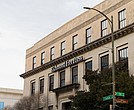
Fairfield Court Elementary is a small, community-based school where most students live within walking distance. The school operates a 200-day calendar, with 16 teachers and parents committed to an extended school year beyond the traditional 180 days. Located in an area with significant economic and social challenges, Fairfield Court has been designated an Equity Focus School, a classification that signals additional resources and support for historically underfunded classrooms.
“My mother attended Fairfield Court when it was first built,” Sneed said. “When I told her I got the job, she told me I’d have to put in the work.”
When Sneed arrived at the school four years ago, she remembered her mother’s words. She began analyzing data to identify gaps and focus her work on the students’ most pressing issues — spelling and fluency. Her targeted approach, including her leadership in adopting evidence-based practices under the Virginia Literacy Act of 2022, led to a 20-point increase in reading scores.
Sneed graduated from Monacan High School and earned a bachelor’s degree in elementary education from Old Dominion University. She was inspired to teach first-grade students while completing her master’s in curriculum and instruction, with a focus on reading, at Virginia Commonwealth University.
“It’s core content for the first-grade level. It’s where the kids learn to read,” she said.
After 15 years in the classroom, Sneed became a reading interventionist, providing targeted small-group and one-on-one instruction to help students build foundational reading skills while collaborating closely with parents. As a literacy coach, she now partners with teachers to support reading and writing instruction, emphasizing data analysis, the science of reading and curriculum strategies to improve student outcomes.
Sneed recalls her first year of teaching when a colleague received the National Teacher of the Year award. Since then, she has looked up to teachers who meet the rigorous qualifications for such honors, admiring their dedication. For Sneed, the recognition validates her work and fuels her commitment to continue the cycle of being inspired and inspiring others.
What is a literacy coach?
As a literacy coach, I prioritize teacher development and curriculum improvement to ensure high-quality instruction. I work with small groups of students needing extra support and serve as a bridge between home, school and community to promote teamwork that enhances student success.
What were some of the efforts you undertook to raise Fairfield Court’s reading scores?
I wanted to stay ahead of the Virginia Literacy Act (VLA) by emphasizing the science of reading and evidence-based instruction. I convinced teachers to try new methods, which proved effective, leading to significant improvements. Now, we have solid data and ongoing conversations across the East End to ensure continuity as students advance through middle and high school, demonstrating the power of collaboration.
What are some of the challenges you face at Fairfield Court as a literacy coach?
Sustaining where we are is challenging, and being cognizant of changes is important. We want to make sure we don’t regress while also understanding that things change.
What do you think it takes to light a spark in children?
Being genuine and knowing their interests. Making eye contact. Getting on their level. Laying out a plan and, most importantly, being authentic.
Why is reading so important for elementary school children?
Once you learn how to read, you can’t take it away. It’s a ticket to opening doors and options. Learning becomes a challenge when students can’t read. They become disengaged because they know they have a deficit, and they may act out or be super introverted.
What are some examples of the inspiration you’ve had at Fairfield Court?
I appreciate when the teachers invite me in to work with them and the students. It’s so gratifying when I see students’ grades improve from a C to an A, or when a student’s reading improves from 30 words per minute to 40 words per minute.
If you had unlimited resources, what would you do?
I would get more technology into the schools and provide access to culturally relevant books that engage the students, so it’s more like their community. Structurally, I’d like to improve the school building to make rooms bigger and include a literacy lab with lots of visuals and tools. I’d like to have beanbags and stools instead of traditional desks and chairs to make the classrooms more collaborative.
What’s a typical week for you?
I may be shoulder-to-shoulder in the classroom or working in smaller groups. I take a day out of the week for my PLC [Professional Learning Community] days and administrative work. I have a planning day with stakeholders once a week. I’m always planning in the background, even during the six weeks we have off in the summer.
How do you start the day?
I’m a door greeter when kids arrive at school, so I see them when they get there. When morning opening is over, I go into the classrooms.
How do you inspire the students?
I ask them what their goals are, what they hope for. Once they give me something, I make sure it’s attainable. For example, if they say they want to become a dentist, I make sure to get a dentist in for career day and have science books for them.
What was the first book you read?
“A Fly Went By,” by Mike McClintock.
What kind of books do you recommend for kindergarten and first-grade students?
I recommend personalized books with the child’s name.
What’s your favorite book for children?
“The Snowy Day,” the iconic 1962 children’s book by Ezra Jack Keats.
What kinds of books do you like to read as an adult?
When I don’t have to read education books, I read romance novels.
What’s your favorite book?
“Blackout,” by Dhonielle Clayton and co-authored with Tiffany D. Jackson, Angie Thomas, Nic Stone, Ashley Woodfolk and Nicola Yoon.
What do you do when you’re not teaching?
I love to travel, so anywhere where there’s a beach is where you’ll find me. I also love spending time with my family.
What inspires you?
I’m a lifelong learner, so I love taking on new tasks. I’m also a giver, so I thrive on relationships with people — helping and supporting them.
Who has influenced you the most?
It’s about the support I get from my family — my mother, my husband and my kids.
What’s next?
I’m not sure what’s next career-wise. I’m in the moment.