Personality: Tina T. Murphy
Spotlight on the Central Region Independent Living Consultant for Project LIFE
2/12/2026, noon
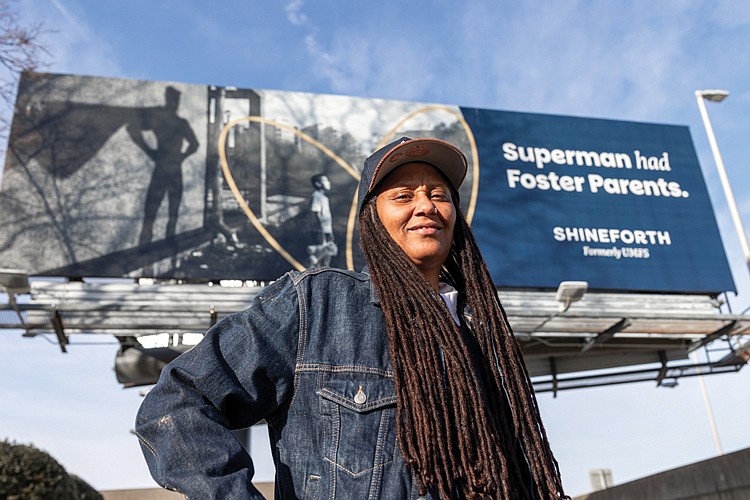
Growing up with six siblings in a modest single-parent household, Tina T. Murphy understood the importance of family support. Many youth exiting the foster care system do not have that safety net.
As an independent living consultant for Project LIFE, a partnership of Shineforth and the Virginia Department of Social Services, Murphy helps young people aging out of foster care navigate the transition to adulthood.
“One caring adult helps,” Murphy said. “Everybody should have someone in this world who is crazy about them, who gives them hope, builds their self-esteem — that one person who genuinely cares.”
Youth who age out of foster care without family or legal guardians face higher risks of not completing their education, homelessness, unemployment and incarceration. The Annie E. Casey Foundation reports that teens and young adults are leaving the system with fewer permanent family connections than they had a decade ago. Black youth are overrepresented in foster care and less likely to be reunified with their parents or adopted.
At Project LIFE, Murphy works with youth exiting foster care to build the skills they need to live independently. She said the work succeeds only when it is grounded in authentic, trust-based relationships.
“It’s not a 9-to-5 job. It goes beyond the spectrum of teaching life skills. We become connected,” Murphy said. “It’s the connection they need to feel safe.”
Murphy grew up in rural North Carolina. Basketball was her ticket to Barton College on a full scholarship, which was notable for her family and her small hometown of Clinton. She earned multiple Player of the Year honors and was the first of her siblings to graduate college.
“My mom didn’t want me to play [basketball],” she said. “My coach and a friend had to convince my mom to let me play. She wanted me to focus on academics.”
Murphy said she discovered her passion for working with youth while at Barton when she noticed two boys frequently spending time at the local gym where she worked. After learning they were homeless, she began buying them food and clothing. She later became a mentor and advocate, helping make sure they attended school.
After college, Murphy took a teaching job and coached basketball. She was recruited to do one-on-one community-based work — her first mental health job. She learned quickly that the effects of trauma on children often manifest in significant behavior issues.
“When you first get into this, your mind is blown,” she said, noting the personal toll of her work. “After years, you get desensitized. You expect the worst. I’m not blown away and not as emotional as I was when I started.”
What is Project LIFE, and what is its connection to Shineforth and the Virginia Department of Social Services?
Project LIFE is a program of Shineforth, an independent 501(c)(3) funded by the Virginia Department of Social Services. Shineforth is the new name for United Methodist Family Services. LIFE in Project LIFE stands for “Living Independently, Focusing on Empowerment.” We’re statewide and help foster kids ages 14 to 23 transition into adulthood by teaching them life skills — health and nutrition, money management, how to find a place to live — skills that parents teach kids. We also advocate for and provide training for other professionals who work with kids in foster care.
What is Project LIFE’s mission?
To enhance the successful transition of older youth in foster care to adulthood by building the skills and capacity of professionals who work with these youth, and promoting permanent connections, effective transition preparation and meaningful youth voice in policy and practice.
What do you do for Project LIFE?
For the central region of Virginia, I directly support the youth in transition. I essentially become that chosen family for the youth.
Why this work?
I believe God chose the work for me. I’m a humanitarian, and I believe there’s no greater service than to serve others. It’s become my passion over the past 23 years.
How can people help you with this work?
Give their time. Being able to support what you say. Everyone wants to be heard. They want to talk so much.
What advice do you give to young adults?
I let them know that they may not be where they want to be, but they’re not where they used to be — they can’t let their past create who they become. I have to walk that in order for them to buy that, and I do.
Why don’t more people become foster parents?
It’s not for everyone.
Why do people perceive that the foster care system is broken?
I agree that it’s broken. There’s a lot that can be fixed. Tell me a system that works. The people in the system are human. I would ask that people not be so judgmental. Get involved.
Is there a child who stood out?
I have so many kids. I have gotten personally involved. There are many. I still communicate with my very first client.
Do you have a success story that stands out?
There are many. I have a CEO group, an entrepreneur program. It’s turned into a tight-knit family. It’s a connection group. They do things like a family — holidays and baby showers. Four of them have been out of care for four years, and they’re still connected with the group.
What was your major at Barton College?
I was a physical education major, and I minored in social work and psychology.
What experience shaped you the most?
It’s hard to say at this point in my life, but working in foster care has exposed me to different socioeconomic levels, like when I train foster families.
What’s something you want to do that you don’t have time for?
Start my own business. I would like to open a 24-hour gym that caters to total fitness. A place where kids can take a break before transitioning to foster homes.
What was your first job?
At The Waffle Kitchen. I had to wash dishes, and everyone in my house knew that’s the one thing I loathed.
Where do you live now?
Western Henrico.
Tell us about your family.
I have a nephew that I’ve raised. He’s 22. My father and two brothers have passed away. I’m very close to my mother, and I try to go to see her as much as possible. I’m the glue of the family.
What do you do in your downtime?
I hang out with friends and family. I like to explore new places and things to do. I like to travel. I like to be out and about. I also like finding new gyms.
What’s your favorite hobby?
Shopping. I like clothes. I like to change up my fashion. It’s a conversation starter with the kids. Stay up to date on fashion and what kids might like.
Favorite place?
I like New Orleans.
What’s next?
I want to become a licensed therapist to provide even more support for the kids.