Virginia reverses law requiring public disclosure of judicial misconduct
By Ben Paviour | 1/8/2026, 6 p.m.

At the end of every year, state agencies, boards and commissions churn out dozens of annual reports. Last year, one notable document was missing.
The annual report from the Judicial Inquiry and Review Commission would normally have been published at the end of November. JIRC’s 2024 report was a rich text: For the first time, it contained the names and misdeeds of Virginia judges who were disciplined by the seven-member commission for violating the Commonwealth’s judicial canons. The change was the result of a 2023 law sponsored by Del. Wren Williams, R-Patrick, which passed with bipartisan support and backing from outgoing Attorney General Jason Miyares.
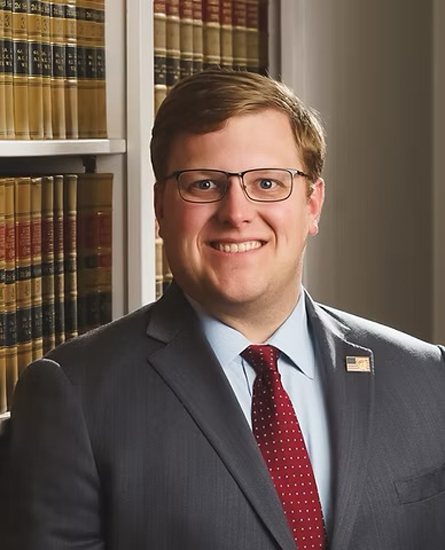 Wren Williams
That brief window of transparency shut last year, when lawmakers unanimously passed a bill specifying they would be the first ones to see JIRC’s annual report — and decide if it’s ever made public.
The change means the public will not know the names and misconduct of errant judges in their communities unless lawmakers decide to release the information for 2025. The 2024 list included a Richmond judge who had made unwanted advances on female attorneys and a Roanoke judge who’d had a relationship and provided legal aid to the mother of a man on trial for murder in the same courthouse.
 Creigh Deeds
In a committee meeting last year, the 2025 bill’s sponsor, Sen. Creigh Deeds, D-Charlottesville, said judges deserved more privacy.
“The whole idea was — especially in unfounded cases — a lot of information that’s available under the FOIA law right now is information that might not be accurate and may be defamatory toward a judicial officer,” Deeds said in a February committee meeting, referring to the Freedom of Information Act.
But Deeds’ statement does not align with what is in the reports. Under the rules of the 2023 law, the outcomes of “unfounded cases” are not published in JIRC’s annual report — only a much smaller number of cases where judges were disciplined for violating the canons.
In a recent interview, Deeds said he was unaware the report contained only the names of disciplined judges.
“When there’s a founded complaint, when there’s disciplinary action — that ought to be public information,” he said.
Deeds said the bill was “not my idea” and that he “really had not had any interest in this before.” At the committee meeting, he said former Portsmouth Circuit Court Judge Kenneth Melvin, who retired last month, had persuaded him to carry the bill. The judge served as JIRC’s vice chair and represented Portsmouth as a Democrat in the House of Delegates for 24 years. Melvin could not be reached for comment for this story.
Deeds said he was unsure how the General Assembly would publish the report if it decided to do so. He also said he was open to reconsidering the bill after a social media thread by Richmond reporter Sarah Vogelsong last month brought the issue to public attention. (Vogelsong previously served as editor-in-chief of Virginia Mercury.)
“I didn’t realize people were hotly anticipating the release of these things,” Deeds said.
All 50 states have systems for screening and investigating ethical complaints against judges. Those complaints are always private, and the overwhelming majority in Virginia involve litigants unhappy with verdicts, JIRC’s counsel, Raymond Morrogh, told lawmakers in a 2021 Senate committee presentation. Those complaints are not eligible for JIRC’s review. If a panel determines a complaint does have merit, it can elect to gather more information, like a response from a judge, or simply express its disapproval without taking formal action.
If an investigation substantiates a complaint, judges may face a range of outcomes, including agreeing to disciplinary actions, like supervision or substance abuse treatment. In more serious cases, JIRC may elect to hold a formal hearing.
The hearings can resemble trials, where a state official presents evidence of misconduct, including witnesses and depositions, and a judge, often represented by a lawyer, presents their defense and cross-examines witnesses. The commission has the power to suspend a judge and recommend that the Virginia Supreme Court censure, remove or force a judge into retirement.
In the majority of states — but not Virginia — fact-finding hearings involving judges are public, according to the National Center for State Courts.
Indiana University law processor Charles Geyh, a national expert in judicial ethics, said
judges were often “reluctant to air their dirty laundry in public,” wary of undermining public trust in the courts. But Geyh argued Virginia’s level of secrecy into judicial misconduct risked undermining that goal.
“We’re past the point where the public is going to sit tight and have the judiciary say, ‘Trust me, we’re doing it — we’re just not telling anybody about it,’” he said. “We’re past the point where that’s enough.”
Fairfax attorney Andi Geloo, a vocal critic of what she calls “wayward judges,” said the secrecy around judicial discipline created a separate standard from others accused of misconduct, from police officers to criminal defendants.
“The public has a right to know how judges are performing and whether they’re upholding the law,” Geloo said. “And this change sends a message that judges are above the law.”
This story originally appeared at VirginiaMercury.com.