Claudette Colvin’s story shows what is lost when history is erased by Marc H. Morial
1/29/2026, 6 p.m.
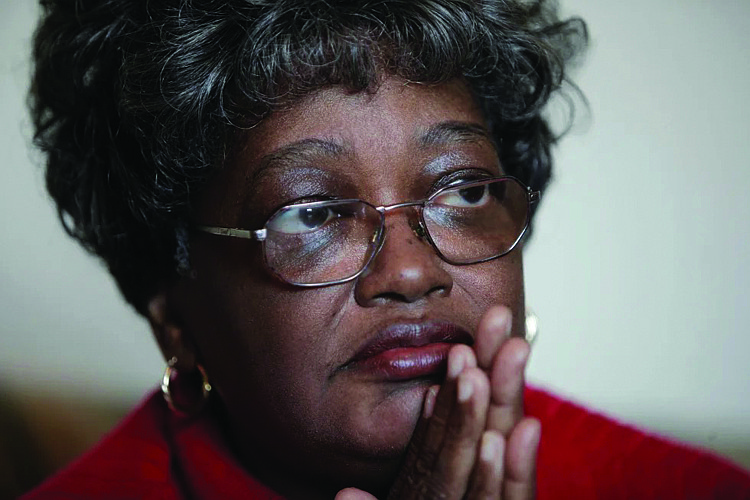
When Claudette Colvin died this month, too many Americans learned her name for the first time in an obituary.
That alone is an indictment.
At 15, nine months before Rosa Parks, Colvin refused to give up her seat on a Montgomery bus. She was arrested, handcuffed and taken to jail for insisting she had the same right to sit in public as anyone else. When the civil rights movement took its case to federal court, Colvin was one of the young women who risked their lives as plaintiffs in Browder v. Gayle, the case that ended bus segregation.
But history has a cruel habit. It elevates the version of a story that is easiest to package, teach and celebrate while pushing the rest to the margins.
That is why Colvin’s passing is more than a sad headline. It is a warning.
While we mourn one civil rights icon whose contributions were often minimized, we are also watching something more deliberate unfold: the active removal of public memory meant to tell the full American story. In Philadelphia, the National Park Service removed slavery-related exhibits at the President’s House site, an installation that honored the nine enslaved people George Washington held there and confronted the contradiction at the nation’s founding.
This is what erasure looks like in real time: not only forgetting the past but also stripping away the tools that help the public remember it.
It is happening alongside other symbolic ruptures. President Donald Trump initially declined to mark Martin Luther King Jr. Day with the traditional proclamation or public recognition, issuing one only after public backlash.
Some may dismiss these moments as politics as usual. But taken together with the administration’s broader push to police how history is told, they point to a deeper project: controlling national memory by narrowing it.
Erasure is not passive. It is a policy choice.
There is a difference between a story fading over time and a story being pulled off the wall.
The actions in Philadelphia were tied to a wider federal directive that framed certain historical narratives as divisive or anti-American. That directive has triggered reviews of interpretation across national parks and museums, including Smithsonian institutions, with pressure to remove or revise material that does not align with a preferred version of American history.
Narrative control is not only about what is taken down. It is also about what gets rewritten.
Inside the White House, official language about the nation’s first Black president has been altered. Descriptive plaques accompanying President Barack Obama’s portrait were revised to reflect a more politicized assessment of his presidency. At the same time, information about prior administrations has quietly disappeared or been rewritten on WhiteHouse.gov, reshaping how recent history is presented to the public. These are not neutral edits. They are reminders that even the most official spaces of national memory are vulnerable to manipulation.
If that sounds abstract, consider what is at stake in plain terms: whether future visitors, especially children, will be allowed to encounter the honest complexity of the past, or only a curated version that flatters power.
This is why public commemoration matters. Holidays, museums, historical markers, school curricula, the naming of buildings and streets — all are not side issues. They are the infrastructure of memory. They teach people what a society values and whose struggles count as part of the national inheritance.
For children, learning honest history is not about shame or division. It is about belonging. When young people can see themselves in the American story, including its struggles and progress, they are more likely to feel pride in their country and a sense of responsibility for its future. Shielding them from the truth does not protect them. It leaves them unanchored, more vulnerable to fear, misinformation and the repetition of past injustices. A nation that wants cohesion must first be willing to tell its children the truth.
When that infrastructure is dismantled, the losses compound. Icons vanish not because their lives mattered less, but because fewer people have the chance to learn about them. Truth becomes optional, treated as ideology rather than a baseline for citizenship. Progress gets rewritten as if it happened effortlessly, without conflict, courage or sacrifice.
Claudette Colvin’s life shows how easily even the bravest contributions can be sidelined. Today’s removals show how quickly sidelining can become a strategy.
There is another truth worth naming. The public is not asking for this erasure.
Research shows Americans remain broadly aligned with the values that powered the civil rights movement. Urban League research on public support for diversity, equity and inclusion shows strong majorities continue to support equal opportunity and inclusive approaches that strengthen communities and expand access.
That matters because the fight to preserve honest history and honor civil rights icons is not fringe. It is mainstream, unifying and deeply American.
If we do not want Colvin’s story, and countless others, to vanish, commemoration must be treated as action, not sentiment. That means protecting public history from political purges, expanding whose stories are told, investing in museums and archives that preserve living memory, and naming the pattern when history is stripped away under the guise of unity.
We do not build a stronger country by hiding its scars. We make it by telling the truth about how we got here and who paid the price.
Claudette Colvin is gone, but her courage remains. The question is whether we will preserve the places, texts and teachings that allow the next generation to meet her where she stood, certain of her dignity and unafraid to claim it.
When we allow civil rights icons to be erased, we do not just lose history. We lose the roadmap.