Personality: Andrew Alli
Spotlight on the Superintendent of James River Park, Trails & Greenways
12/24/2025, 6 p.m.
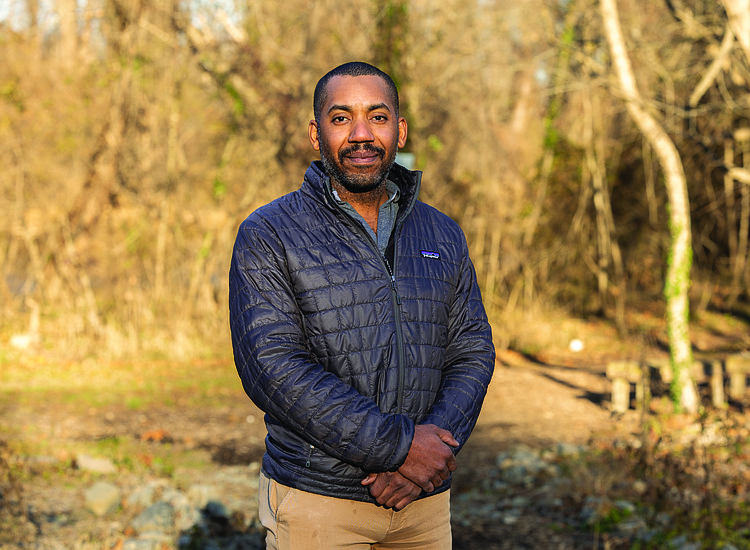
Andrew Alli knew early that a desk job wasn’t for him. Drawn more to rivers, trails and open sky than fluorescent lights, the Godwin High School graduate shifted course at Virginia Commonwealth University, trading an early interest in mechanical engineering for studies in sustainability and the environment.
That decision — rooted in a lifelong love of being outdoors — eventually led Alli to James River Park, where he now serves as superintendent, overseeing the operations, health and long-term stewardship of one of Richmond’s most distinctive public spaces.
“I’d rather be in natural spaces,” Alli said. “I’ve loved being outdoors since I was a kid, playing in parks or at the lake.”
The realization deepened while working at the Backyard Farmer and the Fulton Hill Community Center in gardening, where he saw how access to green space could strengthen communities. The work also instilled an appreciation for cultivation and land stewardship.
After college, Alli spent a year working in trail building and maintenance at Powhatan State Park. When he learned of an opening with the James River Park System, he jumped at the opportunity to work under then-superintendent Nathan Burrell, who became a mentor.
Alli started as a maintenance technician and quickly moved into leadership roles, working with the trail team as JRPS expanded its trail network.
As superintendent with the City of Richmond Department of Parks, Recreation & Community Facilities, Alli oversees the operations, health, accessibility and sustainability of the James River Park System. During his 11 years with the park, his appreciation for its natural character has deepened.
He is focused on preserving the post-industrial landscape, which he sees as a living example of nature’s resilience within the city and its striking contrast to the wilderness experience along the river.
“There’s nothing like James River Park,” Alli said. “It’s the gem of the city and the reason why people come here. The park offers something for every outdoor enthusiast. There’s hiking along top-tier trails, hanging out on the rocks and whitewater rafting for tourists and locals.”
While Alli’s love of the outdoors has shaped a meaningful career, his passion for the blues defines much of his time away from work. He discovered the harmonica as a teenager and has played in several bands over the years, performing blues music across the U.S., Europe and Australia.
What is the James River Park System?
The James River Park System is a roughly 600-acre linear park along eight miles of the James River, created by the city in 1972 from a patchwork of donated riverfront lands. The passage of the Historic Falls of the James Act in 1972 gave the river in Richmond State Scenic River status and embedded protection of the urban falls into state law.
Why is the James River Park System so unique?
It’s a community-built park in the middle of the city. You can get lost and not feel like you’re in the middle of the city. There are so many entrances. A riverfront city typically has a lot of development. JRPS doesn’t. People have put in the work to preserve it because people realize it’s important and an asset.
Tell us about the creation and maintenance of trails.
We have both legitimate and recreational trails at JRPS. Trails require a lot of thought, maintenance and design. Social trails are formed by people who want to go where they want to go. We look at the desired destinations and design a trail around them, ensuring it is sustainable rather than a web of trails that have a negative impact on the environment or cause erosion.
Why is sustainability so important?
We want to make sure we’re not destroying sensitive plants and wildlife and that there’s no negative impact, such as the spread of invasive species. That’s a huge issue. We are implementing a parkwide natural resources plan to sustainably develop and preserve the park. We had consultants come in to advise us on the park’s health at a plant-like level. We want to preserve the healthy parts and rid the invasive species. Human impact is a part of it all, too.
How is JRPS funded?
The city budget. We have 12 full-time staff members.
What are your job responsibilities as superintendent?
I oversee daily maintenance and operations. For example, that could mean anything from trash collection and repairs to development and planning. I wear a lot of hats. There’s a lot of infrastructure to maintain.
What activities are available in the parks during the colder months?
It’s just as many as summer months. The park offers views that you wouldn’t get in the summer. The wildlife is different. Hiking, mountain biking, paddling, etc. You just need the right gear and the know-how.
What activities can you do in warmer and hotter months?
The summer is when you can really feel like you’re not in the city because the leaves buffer the noise. It’s all about the river. There’s swimming and sunbathing. The Fall Line has rock hopping. You can picnic and paddle; there are so many things to do.
What role does the park play in educating the public about river safety and potential dangers?
There’s an inherent danger for any park. We have specific dangers because the river is dynamic. It can change within minutes. Dams have claimed lives, so it’s a constant effort to educate the public and make them aware of the dangers. Our support organizations help us with that. There are PSAs, signage and educational videos. We’re always looking at ways to educate the public. For example, there’s a trail rating system to let you know if you should be on the trail based on your skill level.
How long have you been involved in JRPS?
Since 2014.
What are some examples of recent improvements?
We’ve built more trails. We’re responsible for trails in parks all over the city, and it’s been fun to build those. We’re constantly adding new sections of trail within JRPS.
How would you like to leave your mark on JRPS?
I want to ensure a high level of quality within the park. My pet peeve is litter. I want to reduce the amount of trash in the park. It’s something small, but it makes a big difference. I’d like to see more DIY cleaning stations that have the grabbers, bags and buckets for visitors to help clean up trash so the park can be litter-free.
How do you start the day?
I ride my bike or hike into work and get there before the staff, so I can have my quiet time. I like to ease into my day before the hustle. And black coffee.
What’s your favorite food/ restaurant in Richmond?
My go-to is Goatacado in the Fan. It’s healthy fast food, and they mostly serve bowls and wraps. There’s a good variety. I need good energy food to get me through the day.
What inspires you to do the work you do?
Having a career outdoors and seeing how many other people care about the space. Also, meeting visitors experiencing the park in their own way is exciting.
How do you inspire your team?
Everyone is just as passionate about the space as I am. We attract the people who want the best for the park. I want to provide them with what they need to succeed and stay out of the way. They are so knowledgeable. They inspire me with their drive to maintain the space.
What are some causes that are important to you?
Broader connectivity to park spaces. There isn’t an equal distribution of parks across the city. Everyone should have access to park space and get excited about being outdoors. Creating the opportunity is important.
Who has influenced you the most?
My father has taught me work ethic, drive and persistence.
What’s next?
I want to hike or bike the Appalachian Trail. I’d like to do more bike tours to explore the country and places abroad.