Personality: Viola Baskerville
Spotlight on president of the Afro-American Historical and Genealogical Society
2/5/2026, 6 p.m.
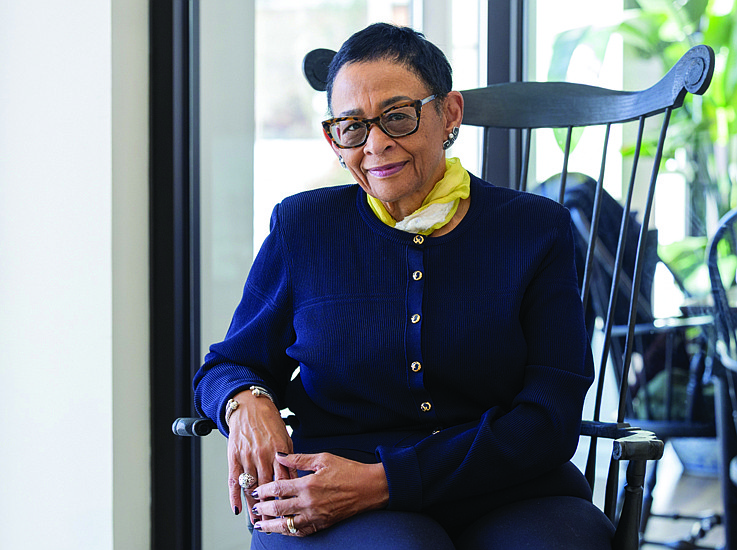
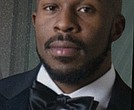
Viola Baskerville, a retired local and state official, is now on the front lines of helping African Americans in Richmond overcome the unique challenges of reconnecting with their roots. Slavery, racism and poor record-keeping have obscured family lines, making oral history and community collaboration essential to tracing ancestry.
“The oral tradition has been so strong in the African American community,” said Baskerville, emphasizing its role in fostering cultural pride and community bonds. “Social media has interrupted that. We need to get back to that.”
Most African American families pass down stories through generations, and many actively pursue this history — Pew Research shows 76% of Black Americans speak with relatives to learn about their roots.
“Finding documents is becoming easier using AI to search. You can search with a key term through thousands of documents and newspapers that are online,” Baskerville said. “It can transcribe handwritten documents, since people can’t read cursive.”
Baskerville grew up in Richmond during the Civil Rights era. Her strong academic record caught the attention of counselors who helped her secure a scholarship to the Northfield School for Girls, a predominantly white elite boarding school in Massachusetts. The program encouraged integration at a time when Southern states were fighting school desegregation.
“My parents told me that if someone else is paying for it, take advantage of it,” Baskerville said.
She continued her education on scholarship to the College of William & Mary, becoming one of only six Black students to enroll in 1969 and the school’s first Black female Fulbright Scholar. Still processing the trauma of integrating the school during the late 1960s, she credits the support of Gov. A. Linwood Holton Jr., who helped end the state’s Massive Resistance to school desegregation.
After a year in Bonn, Germany, on a Fulbright scholarship, she moved to Rochester, Minnesota, to marry. Her husband was completing his internship and residency at the Mayo Clinic. The couple moved to Iowa, where he pursued a cardiology subspecialty and she attended law school at the University of Iowa. After a stint in Los Angeles, they returned to Richmond in the 1980s.
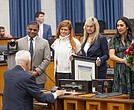
Baskerville’s focus on community service, including serving three years on the City Council and four terms in the House of Delegates, highlights her commitment to community activism and her impact on Richmond’s development and preserving its history.
Why do you do this work?
The work can be painful, but I think about my ancestors. I need to give back. For me, over the past 45 years, I have moved through the three pillars of the oral history, documentation and DNA and evolved from tech paper trailing to telling the stories that need to be told. It’s the hidden history. It’s a mission for me. My law degree, time in government and community work have all helped me do this. All of us have to call upon our best talents to push back against this authoritarianism. Pick your tool. This is mine.
What is the Afro-American Historical and Genealogical Society?
We are one of 35 chapters nationwide, the Greater Richmond chapter. The national organization was founded in the 1970s by James Dent Walker, who worked at the National Archives and saw the need for us to research and document African American history to help people trace their roots. The Richmond chapter started in 2010 with 32 members. Our goal is to promote scholarly research, provide resources for historical and genealogical studies, create a network of people with similar interests and assist members in documenting their histories.
What’s the mission of AAHGS?
The mission of AAHGS is to study and preserve African American history and genealogy, aiming to inspire a shared sense of purpose and community among those passionate about their heritage.
Who can join AAHGS?
Anyone interested in scholarly work or research, or who wants to do the work, regardless of their race. The predominant demographic is Black women ages 55 to 75 who are the matrons holding history together. There are also young people.
Talk about the AAHGS workshops and seminars.
One interesting example is a talk led by Shelley Viola Murphy, an avid genealogist for over 40 years. She gave a presentation about Black people during the Revolutionary War — Black loyalists and patriots. The loyalists fought for their freedom because they were promised freedom if they fought for the British.
What are some of the organization’s milestones?
We just celebrated our 15th year, and our original membership of 32 has grown to over 80 members, second to the Atlanta chapter. Our partnership with the Black History Museum & Cultural Center of Virginia and VCU advances genealogy for future generations amid the current threat of erasing African American and real history. People can’t lie in the original documents. When we understand our own history, we become stronger.
What have you found?
I’ve traced my mother’s paternal line back to 1783 and found a relationship to the Carter Braxton family. He was a wealthy Virginia planter, merchant and a Founding Father who signed the Declaration of Independence.
Who are some of your partners?
The Virginia Museum of History & Culture is a community partner. The Richmond Public Library is also a partner. They received a Mellon Foundation grant that has enabled them to create the best publicly available digitization of public records. We partner with VCU’s Department of African American Studies to get high school kids interested in genealogy.
Where should someone start to research their genealogy?
There are three pillars: the oral history. Write it down, whether you can prove it or not. Then, use what you know to find the documentation that supports it. Once you’ve done that, do the DNA tests. That will prove or disprove what was in the oral history and the documentation. All three are needed. People get discouraged because it can take years.
What AI tools do you use for genealogy?
I’ve been using AI for the past two or three years, and I use a combination. I use Perplexity because it has attribution, Claude to check ChatGPT and Gemini to upload blurry photos to chat to make them more legible.
What are you working on now?
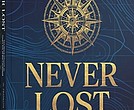
I’m writing a history of the Black boatmen of the James River for The History Press. They helped Richmond grow.
Tell me about your family.
I’m married and have two sons. I have three siblings and a twin sister.
What’s your guilty pleasure?
Ice cream sundae, even though I’m lactose intolerant.
What was your first job?
Working at the Lerner Shop in downtown Richmond.
What experience shaped you the most?
I was a Girl Scout as a young girl and later became the CEO of the Girl Scouts of Virginia; every time we had to move, I faced change and new experiences. Changes prepared me for what would come next in life.
What’s next?
Meeting my deadlines for my book.