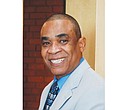
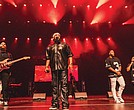
Rev. Sylvester “Tee” Turner, leader of Richmond’s Slave Trail, dies at 74
By Michael Phillips | 1/16/2026, 10:39 a.m.

Rev. Sylvester “Tee” Turner, a prominent Richmond pastor who helped build many of the institutions acknowledging the city’s slave-trading past and worked toward racial reconciliation, died Sunday. He was 74.
Turner grew up in Gilpin Court and, after serving in the Air Force in California, returned to Richmond with the goal of helping heal racial divisions in his hometown.
Friends and colleagues remembered a man with an unwavering commitment to discovering and telling the truth about slavery, while insisting that the work cross racial lines. His institutional memory often served as a bridge between the Civil Rights era and the present day.
“We walked into the downtown Hilton (formerly Miller & Rhoades) for an event, and he said, ‘Hold up, I remember when I wasn’t allowed to be in this building,’ because of segregation,” said Allan-Charles Chipman, who worked with Turner at Initiatives of Change USA.
Turner played a major role in the creation of Richmond’s Slave Trail and led thousands of people on tours, recounting the city’s history while emphasizing the need to move forward. He was a co-founder of the National Slavery Museum Foundation, now known as the Shockoe Legacy Foundation.
“Rev. Turner was instrumental in the success and growth of the organization from its very beginning,” wrote Del. Delores McQuinn, one of his closest partners. “His unwavering commitment to truth-telling, historical justice, healing and reconciliation would empower and shape the community in understanding the mission and vision of the Foundation in profound ways.”
In 1993, Turner spoke at a Richmond history walk that drew hundreds of people from around the world for “An Honest Conversation on Race, Reconciliation and Responsibility.”
Rev. Ben Campbell of Richmond Hill said Turner had a rare ability to bring people of different races together for difficult conversations.
“He would call it ‘The Work,’” Campbell said. “He had a quiet fidelity that honored both white people and Black people in that work.
“He was interested in helping communities be effective, and we really felt that right here in Richmond. You’ll find thousands of people who knew him and worked with him. He was quiet, a truth-teller, and insistent on what was important.”
Turner was also involved in numerous other Richmond initiatives, including the reception of the Richmond Slavery Reconciliation Statue on East Main Street in Shockoe Bottom.
Richmond Mayor Danny Avula paid tribute to Turner on Thursday morning.
“Tee was such a huge part of telling and elevating Richmond's stories – stories of justice, healing, and reconciliation,” Avula said. “While we can't replace the impact he had on our region, we can learn from his legacy as a truth-teller who continually drove us forward through his stories.”
Chipman said Turner was never interested in status or power, only in continuing the work.
“Reverend Tee was the kind of person that wouldn’t just pass you the baton, he would pass you the baton and teach you how to run, and cheer you on, and also tell you to pick the pace up,” Chipman said.
Turner was widely described as someone deeply committed to telling the truths of slavery while encouraging reconciliation.
“That’s the true definition of the word pastor,” Chipman said. “It’s not just the information you give in the sermon, but it’s how you walk people through life.”
LaDora Carter, who worked with Turner at Initiatives of Change, called him “a library of knowledge and wisdom.”
“I’m especially left with a memory of his guidance on facilitating difficult conversations,” she wrote. “While facilitating a public walk of the Trail of Enslaved Africans, I asked him, ‘Hey, Rev. Tee, you see the sunset?’ and he’d respond in true Reverend fashion, ‘Yes, but trust the process. The sun will rise again.’
“The embers of his light will continue to burn bright within us. I’m incredibly honored to have served alongside him.”
Turner’s death came as a shock to many who worked with him.
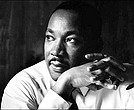
Chipman recalled the words of the Rev. Martin Luther King Jr., who said in his final speech, “I may not get there with you,” while expressing faith that the Civil Rights movement would reach its goals.
“We just didn’t think the journey would start this soon without him,” Chipman said.
This story originally appeared on TheRichmonder.org